Hunting and Fishing Lodge Jobs in the U.S. (2026)
Scattered across America's wildest corners is a niche hospitality industry most job seekers never think of: hunting and fishing lodges. These small, often family-run operations host well-paying guests in remote places - and every season they need cooks, housekeepers, dock hands and guides willing to live where the road ends. Because few people ever apply, motivated candidates with the right attitude face far less competition here than in mainstream resort hiring.
Where and when
- Alaska fishing lodges: the biggest cluster - fly-in salmon and halibut lodges around Bristol Bay, the Kenai Peninsula and Southeast Alaska, running roughly June to September.
- Rocky Mountain outfitters (Montana, Wyoming, Idaho, Colorado): summer fly-fishing seasons, then autumn elk and deer hunting camps from September to November.
- Texas hunting ranches: a huge, less-known market - deer season roughly November-January plus year-round exotic-game ranches in the Hill Country.
- Southern duck lodges (Arkansas, Louisiana, Mississippi): waterfowl season roughly November-January.
- Great Lakes and Canada-border fishing camps (Minnesota, Michigan): May to September walleye and bass seasons, generally more accessible by road than the Alaska operations and a gentler introduction to camp life.
The roles
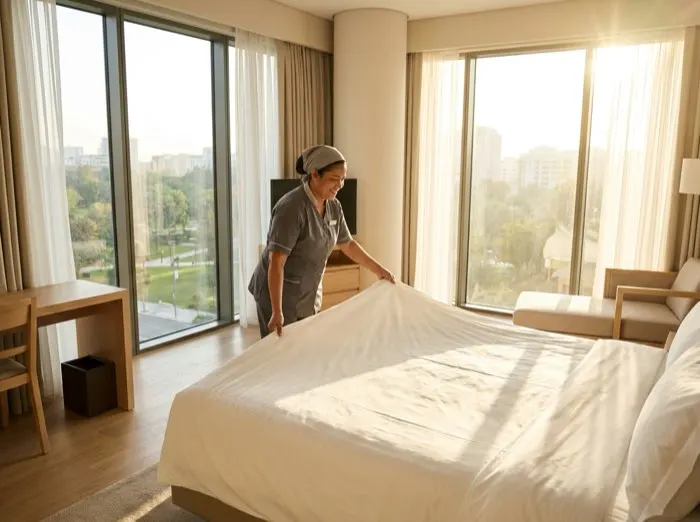
Guiding requires local licenses, guest skills and usually U.S. experience - it is the hardest role to enter from abroad. The realistic entry points are the support jobs that keep a lodge running: cooks and kitchen assistants, housekeepers, servers, dock hands, boat cleaners, maintenance workers and drivers. A lodge hosting twenty guests may run a staff of fifteen; everyone does a bit of everything, and the cook who also fixes the generator is the most valuable person in camp.
Pay, tips and the hedged truth
Base pay for support roles typically lands somewhere around $14-18 per hour in 2026, or a monthly salary at smaller camps - but the real variable is tips. High-end lodges charge guests hundreds of dollars a night, and tip pools shared among staff can meaningfully raise earnings in good weeks. Nothing is guaranteed: ask how the tip pool works, who shares it, and what a typical season looked like last year. Room and board are almost always included given the remoteness - confirm whether any deduction applies.
Housing and lodge life
You live on site, usually in shared staff cabins. Expect limited internet, no town nearby, and workdays shaped by guest schedules - early breakfasts, late dinners. The compensation is the setting: guides and dock hands fish on days off, and staff see bears, moose and rivers that tourists pay thousands to visit. It suits self-sufficient people; it isolates people who need a social scene.
Visa route
Lodges that sponsor foreign staff use the H-2B program for seasonal support roles - cooks, housekeepers, general workers. Small operators often recruit through the same networks each year and file early because H-2B is capped; for a June Alaska start, hiring conversations happen the previous autumn and winter. Our H-2B explainer covers the process, and this guide explains what sponsorship costs employers - never workers. Anyone charging you a fee for a lodge job is not legitimate.
How to actually get hired
Lodge hiring is relationship-driven. Owners hire people they trust to live in their house, essentially, for four months - so a clear profile with real photos, verifiable references and honest descriptions of your cooking, boat or hospitality experience matters more here than in any high-volume sector. Highlight practical skills lodges quietly need: baking, small-engine repair, first aid certificates, a clean driving record, fluency in guests' languages. Couples willing to take a cook-plus-maintenance pairing are especially attractive to small operations. Apply or make yourself visible in autumn and winter for the following summer; Alaska lodges in particular finalize crews around January-March, aligned with their H-2B filing timelines.
Ask hard questions before committing: exact season dates, weekly schedule during guest turnover days, tip history, and what happens during the shoulder weeks when the lodge is being opened or winterized - that setup work is part of most contracts and is heavier than the guest-season routine.
This is general information, not legal advice. Official visa rules: uscis.gov; guide licensing varies by state - check the relevant state wildlife agency.
If remote-lodge seasons sound like your kind of adventure, create your free profile on Workmerica - it's free, no credit card, and employers contact you directly.
Chcesz, żeby pracodawcy Cię znaleźli?
Załóż profil w 2 minuty. Za darmo, bez karty kredytowej.
Czytaj dalej