How to Transfer Your Welder License to Michigan (2026)
How welder credentialing works in Michigan
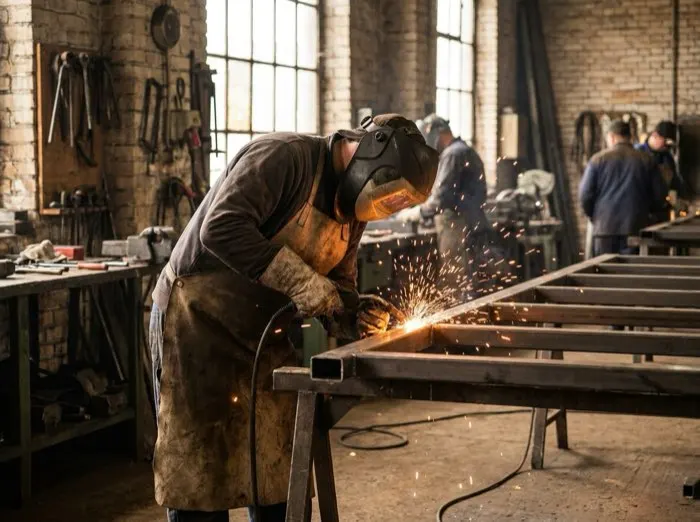
Moving to Michigan as a welder requires understanding a key fact right away: Michigan does not issue a single, all-encompassing statewide master welder license for general shop or production work. Instead, trade regulation depends entirely on your industry sector and the structural risks involved in your projects. If you perform structural steel welding, your work must satisfy the Michigan Building Code, which relies heavily on American Welding Society (AWS) standards. If you specialize in pressure vessels, boilers, or high-pressure piping systems, you fall under state regulation through specific trade divisions.
In Michigan's heavy manufacturing, automotive tooling, defense contracting, and industrial construction hubs, credentials follow specific technical codes. Detroit, Warren, Grand Rapids, and Flint feature massive manufacturing ecosystems where employers maintain strict internal quality systems. While bench welders in production shops do not need state registration, qualified field welders on structural buildings, bridges, and energy infrastructure must hold verified performance qualification records. Understanding how your current out-of-state testing records fit into Michigan's legal framework will save you weeks of administrative delay when relocating.
The regulating body and state code standards
The primary state-level agency overseeing regulated welding work in Michigan is the Michigan Department of Licensing and Regulatory Affairs (LARA), specifically operating through the Bureau of Construction Codes. Within this bureau, the Boiler Division enforces state laws concerning pressure components and structural integrity under the Michigan Boiler Law and Rules.
For pressure vessel and boiler repair welders, LARA mandates that all welding procedures and welder performance qualifications comply with Section IX of the American Society of Mechanical Engineers (ASME) Boiler and Pressure Vessel Code. Under this system, individual welders do not hold independent state licenses. Instead, you must be formally qualified under a licensed Michigan Boiler Installer or Repairer contractor. The employer submits your Welder Performance Qualification (WPQ) paperwork directly to the LARA Bureau of Construction Codes Boiler Division prior to work commencing on regulated units.
For structural steel work, local municipal building officials enforce the Michigan Building Code, which adopts AWS D1.1 (Structural Welding Code for Steel) and AWS D1.2 (Structural Welding Code for Aluminum). Weld tests for these applications must be administered by an AWS Accredited Test Facility (ATF) or supervised by a Certified Welding Inspector (CWI) recognised by local code enforcement authorities across Michigan municipalities.
Reciprocity, out-of-state transfers, and AWS recognition
Michigan does not maintain standard license reciprocity agreements with other states for welders. Because Michigan does not issue a general individual welder license card, there is no state card to trade in or swap via endorsement. Instead, your ability to start working immediately depends on the portability of your current national certifications and test documentation.
If you hold a portable national credential, such as an AWS Certified Welder card, your qualification transfers across state lines seamlessly. AWS credentials are based on standard national testing procedures (such as AWS D1.1 plate or pipe tests). As long as your six-month AWS maintenance log is completely up to date and signed off by a certified employer or CWI, Michigan building inspectors and contractors will accept your national card.
Conversely, if your qualifications consist of in-house company tests from a former out-of-state employer, those test records are non-transferable. Michigan law and ASME/AWS standards require the hiring entity or contractor to hold your qualification records under their own quality assurance program. Upon hire in Michigan, you will need to take a new weld coupon test under your new employer's Procedure Qualification Record (PQR) unless you hold an active, independent national card from an accredited testing facility.
Step-by-step process to transfer your welding credentials
To transition your welding trade credentials to Michigan smoothly, follow these operational steps before and during your move:
- Gather your complete testing portfolio: Compile original copies of your Welder Performance Qualification (WPQ) test records, Procedure Qualification Records (PQR), past CWI inspection sheets, and active AWS cards.
- Audit your continuity log: Ensure your AWS or ASME six-month welder verification log has been signed off by your previous employer's quality control manager before you officially leave your prior state. If your continuity log lapses, your national certifications become inactive.
- Identify industry requirements in your target region: If moving to Metro Detroit or Grand Rapids for structural work, confirm whether your target jobs require AWS D1.1 heavy plate or FCAW dual-shield certification. If heading to northern Michigan or the Upper Peninsula for pipeline work, check API 1104 requirements.
- Register through your Michigan contractor: For boiler and pressure vessel welding, secure employment with a LARA-licensed contractor. Your contractor will file your ASME Section IX WPQ papers with the LARA Bureau of Construction Codes Boiler Division.
- Schedule testing at an accredited facility if needed: If you need to refresh expired certifications or acquire new process endorsements (such as GTAW stainless or ASME pipe), book a test at a Michigan AWS Accredited Test Facility or regional union hall prior to your first day on the job site.
Costs, processing timelines, and local tax realities
Understanding the financial and administrative timeline for transferring your credentials will keep your move on schedule:
- Testing fees: Taking a structural or pipe weld test at a Michigan accredited testing facility generally costs between $150 and $450 per coupon, depending on the process (SMAW, GMAW, FCAW, or GTAW) and non-destructive examination (NDE) requirements such as bend or X-ray testing. Confirm exact pricing with the specific testing facility.
- AWS national renewal fees: Submitting your six-month AWS maintenance form to keep your portable card active typically costs around $60 to $110. Confirm current rates directly on the AWS site.
- LARA filing timelines: Employer filings for boiler welder qualifications through the LARA Bureau of Construction Codes generally process within 2 to 4 weeks. Always confirm current processing times on LARA's official site.
- State and municipal taxes: Michigan levies a flat 4.25% state income tax on all earning residents. However, many Michigan industrial cities add a local municipal income tax. For example, Detroit charges a 2.4% resident local tax (and a 1.2% non-resident tax if you work within city limits). Cities like Grand Rapids, Flint, Saginaw, and Lansing also collect local municipal taxes ranging from 1% to 1.5%. Factor these local deductions into your budgeting.
- Relocation assistance note: Michigan offers no statewide programs that pay individuals to relocate. All moving costs and initial certification expenses must be handled independently or negotiated directly with your prospective employer.
What people get wrong about welding in Michigan
- Assuming a universal state license exists: Michigan does not issue a general statewide welder card; credentials are tied to standard national codes, specific industries, and LARA trade divisions.
- Expecting in-house tests to transfer: Out-of-state employer-specific weld tests do not carry over to new Michigan contractors. You must either possess a national portable credential or re-test under your new company's procedures.
- Letting continuity logs lapse during the move: Failing to get your six-month AWS verification signed before leaving your old job revokes active status, forcing you to pay for full re-testing upon arrival.
- Overlooking city income taxes: Moving to industrial centers like Detroit or Grand Rapids means paying local municipal income taxes on top of the flat 4.25% state rate.
- Bypassing LARA boiler filing rules: Attempting to perform pressure vessel work without filing WPQ paperwork through a licensed Michigan boiler contractor violates state boiler laws.
Next steps for your move to Michigan
Preparing your paperwork, confirming your continuity logs, and understanding state trade codes ensures you arrive in Michigan ready to hit the shop floor or job site without missing a paycheck. For updated state guidelines, detailed wage data, regional trade expectations, and job opportunities, visit the Michigan page. Explore our state guides, review tax breakdowns, and check live job openings across the state. Setting up a free Workmerica profile puts your trade skills directly in front of Michigan employers looking to hire experienced welders relocating from out of state.
Chcesz, żeby pracodawcy Cię znaleźli?
Załóż profil w 2 minuty. Za darmo, bez karty kredytowej.
Czytaj dalej