Moving to Vermont as a Truck driver: the checklist (2026)
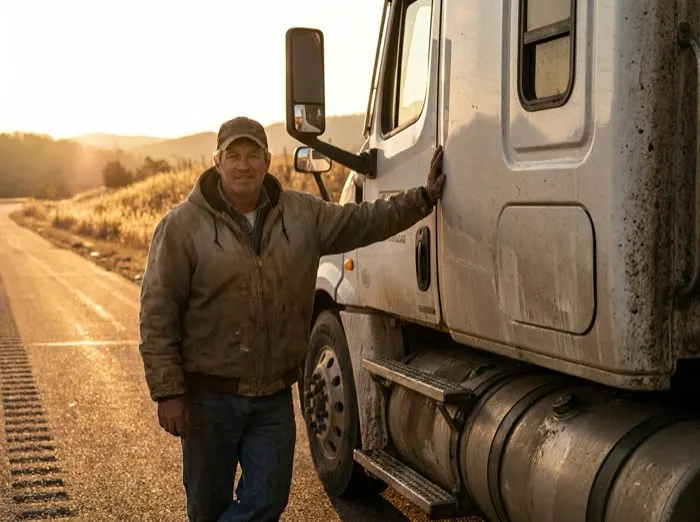
Moving to Vermont as a CDL truck driver is four jobs in a fixed order: the licence, the employer, the money, then the move itself. Do them in that order and the first paycheck arrives in the first month; do them in the order most people do, truck first, and the licence wait eats the savings. This checklist is specific to Vermont: a progressive state income tax with a top rate of 8.75%, a 30-day CDL transfer window, and one program that pay people to move in.
Step 1, before you give notice: your CDL in Vermont
A commercial driver's licence transfers like any driver's licence, which is the good news; the catch is the clock. Within 30 days of becoming a Vermont resident you surrender your current CDL at a Vermont driver licence office, pass the vision test, pay the fee, and your class and endorsements carry over.
- Bring your medical certificate (the DOT physical). Vermont will want it on file before it issues the licence.
- A hazmat endorsement needs a fresh TSA threat assessment in Vermont; it does not transfer. Start it early, it takes weeks.
- Your driving record follows you through the federal CDLIS system, so a clean record is a clean record in Vermont and a suspension is still a suspension.
- Check your employer's domicile rule. Some carriers need the licence in the new state before your first dispatch there; others give you the 30 days.
Step 2: line up the job before the truck
Drivers in Vermont are hired by regional carriers, LTL terminals, construction supply and food distribution. The metros with the most of that work are Burlington, South Burlington and Rutland. Two kinds of employer are worth your first calls:
- Employers that have filed with the Department of Labor because they could not hire locally. Those filings are proof they are already paying to bring people in, and they are listed on the Vermont openings page.
- Employers that pay relocation. Ask after the offer, not in the first interview: "I can start on the 15th if the move is covered; what does your relocation package include?" Get whatever is agreed into the offer letter. Most packages are taxable income, so a $3,000 package is about $2,200 in your pocket.
Put your destination and your licence on your Workmerica profile: employers in Vermont searching for drivers who are already on their way see you before you arrive, and that is the point of being in the register.
Step 3: the money, in the order it matters
Vermont has a progressive state income tax with a top rate of 8.75%. Run your current salary through the state tax table before you negotiate: the same offer is worth a different amount in every state, and employers quote gross.
For comparison, next door: New York has a progressive state income tax with a top rate of 10.9%, New Hampshire has no state income tax on wages and Massachusetts has a flat 5% state income tax.
Vermont also has a program that pay people to move in:
- New Relocating Worker Grant: up to $7,500 for moving costs, for people who move to Vermont for a job with a Vermont employer; funded in rounds, closes when the money is gone.
Every one of these has a residence condition, usually a year, and claws the money back if you leave early. The amount is the program's own "up to" figure and changes with each funding round. Apply before you sign a lease; most programs will not pay somebody who has already moved.
Step 4: the first 30 days in Vermont
- Driver's licence and plates. Most states give you 30 days to swap a driver's licence and 30 to 60 to register the car; Vermont's driver licence office has the exact window. Bring proof of the new address.
- Your new CDL. Do not start work before it exists. A good employer will not let you anyway.
- Tax withholding. Give your employer a Vermont withholding form on day one; the state you left will otherwise keep taking its share until you file.
- Voter registration and address changes with your bank, your licensing board and the USPS. The board matters: renewal notices go to the address on file.
- Keep the old licence alive until the new one is in hand. Letting it lapse "because I am leaving anyway" is the most common way people arrive unlicensed.
What people get wrong
- Missing the 30-day window. A late swap is a ticket and, with some carriers, a dispatch hold.
- Forgetting the DOT medical certificate. The office will not issue without it on file.
- Assuming hazmat transfers. The TSA check is per state and takes weeks.
- Signing a training-contract clawback without reading the schedule. The fair ones reduce what you owe each month you stay.
Everything about Vermont, on one page
The Vermont page has the registries and boards named above, the income tax table at three salaries, the programs that pay you to come, and the openings filed in Vermont this month. If you know which state you are leaving, the move pages compare the two directly, licence by licence. Creating a free Workmerica profile with your trade and your destination puts you in front of Vermont employers who hire from out of state, before you have packed a box.
Готові, щоб вас знайшли?
Створіть профіль за 2 хвилини. Безкоштовно, без картки.
Читати далі