How to Transfer Your Welder License to Washington (2026)
The Lay of the Land for Out-of-State Welders in Washington
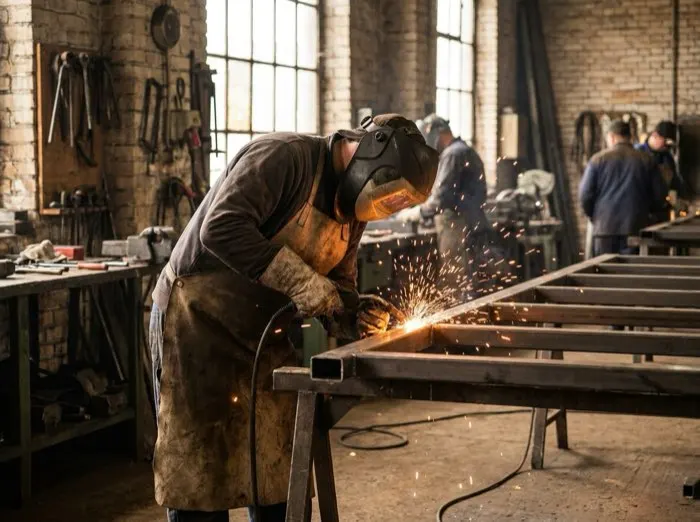
Moving your welding career to Washington state offers access to major industrial hubs, including aerospace manufacturing, marine repair along Puget Sound, infrastructure builds, and high-tech facility construction. However, Washington handles trade licensing differently than many other states. There is no single statewide general journeyman welder license issued by a central board for all welding types. Instead, certification depends directly on the sector you work in and the specific code governing your projects.
For structural welding on buildings, bridges, and commercial framing, the dominant authority across the state is the Washington Association of Building Officials, commonly known as WABO. If you plan to weld boilers, pressure vessels, or high-pressure piping, your work falls under the Washington Department of Labor and Industries, also known as L&I. If you take on structural jobs inside the city limits of Seattle, you will also encounter local city endorsement requirements managed by the Seattle Department of Construction and Inspections.
A major financial benefit of relocating to Washington is that the state charges no state income tax on earned wages. That means your base hourly rate goes further toward your take-home pay. Be aware that Washington does assess a 7 percent tax on large capital gains and collects a small state payroll premium to fund a public long-term care benefit called WA Cares, but your standard labor wages remain entirely free of state income tax.
The Main Certification Bodies: WABO, L&I, and Seattle
To plan your move efficiently, you must identify which agency governs the specific type of welding you perform day to day. Relying on a standard out-of-state card without knowing which Washington agency applies to your job site is one of the most common delays experienced welders face.
- WABO (Washington Association of Building Officials): This organization sets the standard for structural steel, sheet steel, reinforcing steel, and structural aluminum welding across most Washington municipalities. Most commercial contractors require a current WABO welder certification card before you can strike an arc on site.
- Washington Department of Labor and Industries (L&I): L&I oversees safety and trade compliance state-wide. They regulate pressure vessel and boiler welders under the Washington Administrative Code. L&I enforces ASME code compliance and oversees general workplace safety through WISHA standards.
- Seattle Department of Construction and Inspections (SDCI): The City of Seattle maintains its own specific structural welder license. If you are working on structural projects within Seattle city boundaries, you must possess a Seattle Welder License, which involves a written trade exam in addition to your practical hands-on test.
Reciprocity, AWS Cards, and Out-of-State Credentials
A frequent question from relocating welders is whether an active American Welding Society card or a state license from places like California, Oregon, or Texas transfers automatically. Washington does not offer direct nationwide reciprocity or automatic endorsement for out-of-state welder cards.
Even if you hold a valid AWS D1.1 certification or a state-issued card from your previous state, you cannot simply swap it at an office window for a WABO card. WABO operates its own registered testing system under WABO Standard 27-13. However, having existing certifications and a documented continuity logbook makes the transition much smoother.
If your previous AWS test was conducted at an accredited testing facility that follows strict AWS or ASME standards, some testing labs in Washington will review your certified mill test reports and procedure qualification records. In most cases, you will still need to perform a physical welder performance qualification test at an accredited WABO testing agency located within Washington or an authorized regional facility before your WABO card is granted.
Step-by-Step: How to Get Your WABO Certification
If you perform structural welding, securing your WABO card should be your highest priority when arriving in the state. Following these steps helps ensure you are qualified to work immediately upon arrival.
- Step 1: Document Your Experience: Bring your original test records, AWS cards, welder continuity logs, and employer verification letters signed by a Certified Welding Inspector. Showing uninterrupted use of the process within the past six months is essential.
- Step 2: Choose Your Process and Position: Identify the specific processes you need for your target job, such as SMAW, FCAW, GTAW, or GMAW, as well as the position and thickness range. Standard WABO structural tests usually involve unlimited thickness testing on plate with backing using FCAW or SMAW in vertical and overhead positions.
- Step 3: Schedule a Test at a WABO Testing Agency: Contact an approved WABO testing site. These labs are located throughout Washington, frequently run by community colleges, independent testing laboratories, or union training centers.
- Step 4: Pass the Performance Qualification Test: You will weld test plates according to WABO Standard 27-13 under the direct supervision of a WABO-approved inspector. The plates undergo visual inspection and guided bend tests or radiographic examination.
- Step 5: Submit Application and Certification Fees: Once your test plates pass inspection, the testing agency submits your paperwork to WABO. WABO processes the documentation and issues your official welder card.
- Step 6: Apply for Seattle Endorsement (If Applicable): If your job is inside Seattle, submit your passing WABO test results to the City of Seattle and take their required written exam on local building codes and safety regulations.
Expected Fees, Testing Costs, and Processing Timelines
Because welding certification relies on private testing labs and regional agencies rather than a single state licensing board, costs vary based on the process and facility you select. Always confirm exact current pricing and scheduling directly on the testing body or agency site before booking.
- WABO Practical Testing Fees: Expect to pay between $150 and $350 per process at an accredited testing lab. This fee covers test materials, coupon preparation, facility time, and laboratory destructive bend testing.
- WABO Card Issuance Fee: WABO charges an administrative fee to issue or renew the physical card, typically ranging from $50 to $90. Confirm exact current rates on the official WABO website.
- Seattle City License Fees: The Seattle Department of Construction and Inspections charges an application and examination fee, usually between $150 and $250 for structural welder licensing.
- Processing Timelines: Practical testing takes a few hours, but laboratory evaluation and paper processing take time. Expect a timeline of 1 to 3 weeks from the day you pass your bend test to holding your official card in hand. Many contractors will accept a signed passing test record from the approved laboratory as temporary proof of qualification while your official card processes.
What People Get Wrong About Moving as a Welder
Relocating for work involves avoiding simple misunderstandings that can cost you time and income. Here are the missteps out-of-state welders make most often when entering the Washington market.
- Assuming AWS Cards Transfer Automatically: Expecting a job site superintendent to accept an out-of-state card without a WABO stamp or local employer-sponsored bend test will leave you sidelined on day one.
- Ignoring Seattle-Specific City Rules: Believing a WABO card covers you everywhere in the state is a common trap. Working within Seattle city limits requires a separate city-issued license.
- Letting Continuity Logs Lapse During the Move: If you go more than six months without a signed welder continuity record from a supervisor or inspector, you may be required to re-test completely rather than renewing by continuity.
- Confusing General Construction with Boiler Work: Structural WABO cards do not allow you to weld on pressure piping or boilers governed by L&I and ASME codes. Ensure you know which certification your specific job demands.
Take Your Next Step Toward Moving to Washington
Relocating your career to a new state is much simpler when you have clear, accurate facts regarding local regulations, compensation expectations, and trade requirements. Getting your certifications lined up before you arrive ensures you can start working and earning immediately.
To simplify your relocation, explore the Washington page on Workmerica. You will find trade registry resources, local tax breakdowns, and live job openings from top Washington employers who actively hire skilled trade professionals moving from out of state. Create your free profile today to get your skills directly in front of hiring managers across Washington.
क्या आप तैयार हैं?
2 मिनट में अपनी प्रोफाइल बनाएं। मुफ्त, बिना क्रेडिट कार्ड के।
आगे पढ़ें