Summer Resort Jobs in the U.S.: Regions and Roles (2026)
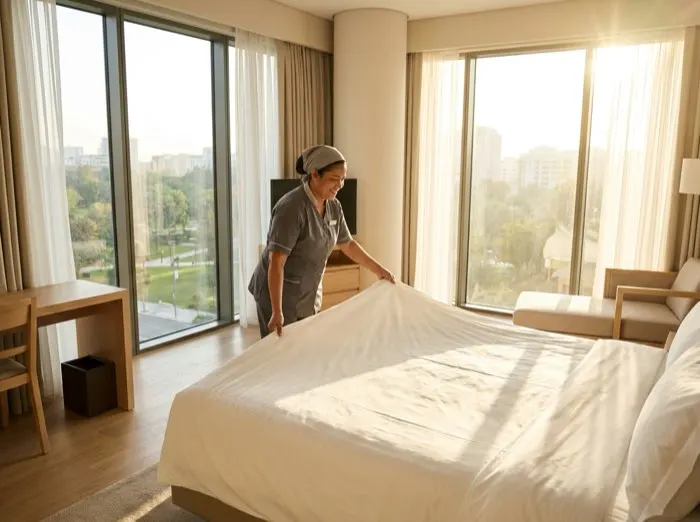
Every year from roughly May through September, thousands of American resorts staff up for their busiest months. Beach towns, lake resorts, dude ranches and mountain lodges all need far more workers in summer than they can find locally, which is why this sector is one of the biggest users of seasonal foreign labor in the United States.
Where the summer resort jobs are
Summer resort hiring clusters in a few distinct regions, each with its own flavor:
- New England coast: Cape Cod and Nantucket in Massachusetts, coastal Maine (Bar Harbor, Kennebunkport) and the Rhode Island shore. Hotels, inns, seafood restaurants and marinas hire heavily from May to October.
- Mid-Atlantic beaches: Ocean City in Maryland, Virginia Beach, the Jersey Shore and Delaware beaches. Amusement piers, boardwalk food outlets and hotels dominate.
- Great Lakes: Mackinac Island in Michigan is a famous example - a car-free island where nearly the whole workforce arrives for the season. Wisconsin's Door County and Minnesota lake resorts are similar.
- Mountain West: Colorado, Montana, Wyoming and Utah resorts pivot from ski season to summer hiking, rafting and wedding season. Towns near Yellowstone and Glacier fill up with seasonal staff.
- The South: Myrtle Beach in South Carolina, the Florida Panhandle and Gulf Shores in Alabama run long seasons that can stretch from March to October.
Typical roles and what they pay
The bread-and-butter positions are housekeeping, kitchen help, dishwashing, food and beverage service, front desk, grounds keeping, lifeguarding and activities staff. Pay varies a lot by state and employer, but housekeeping and kitchen roles typically fall somewhere around $15-20 per hour gross in 2026, with tipped service roles sometimes earning more in busy weeks. High-cost destinations like Nantucket or Colorado resort towns often pay above that range because they simply cannot attract staff otherwise. Treat any figure as a starting point and confirm the wage in the official job order before you commit.
The visa route: mostly H-2B
For workers outside the U.S., the main legal route into resort work is the H-2B visa for temporary non-agricultural jobs. The employer - not you - must apply for certification, prove they could not find U.S. workers, and name the wage they will pay. Students sometimes arrive on the J-1 Summer Work Travel program instead, but H-2B is the route for the general workforce. If the process is new to you, read our guide to the H-2B visa explained and the overview of how U.S. visa sponsorship works.
Housing: ask before you sign
Unlike agricultural H-2A jobs, H-2B employers are not required to provide housing - but many resorts do, because their towns have no affordable rentals. Staff dorms, shared apartments and converted motels are common, usually with a payroll deduction of roughly $75-150 per week. Always ask in writing: is housing provided, what does it cost, and how many people share a room? A great wage means little in a town where a studio rents for $2,500 a month.
Timing your search
Resorts plan early. Recruitment for a May start often begins the previous autumn, because the employer's H-2B filing has to work through the Department of Labor and USCIS months in advance. If you want summer 2027 work, be visible to employers by September or October 2026.
A realistic week in a summer resort job
Expect five to six working days, with your days off falling midweek - weekends are when the guests come, so weekends are when you work. Housekeepers typically clean a set list of rooms per shift; kitchen staff rotate between prep, line and cleanup; front-of-house staff work split shifts around breakfast and dinner service. July 4th week and the August peak are all-hands stretches when overtime is common, and the quiet shoulder weeks of May and September are when you actually see the beach. Many resorts feed staff one or two meals per shift, which quietly saves a meaningful amount of money over a season.
Questions to ask before accepting any resort offer
- What are the exact season start and end dates, and is the end date weather-dependent?
- How many hours per week are guaranteed, and how many are typical in peak weeks?
- What exactly does the housing deduction cover - utilities, bedding, Wi-Fi?
- Is there an end-of-season bonus, and what are the conditions for receiving it?
Employers who answer these questions promptly and in writing are almost always the ones worth working for. One warning that applies across this whole industry: no legitimate employer or recruiter charges workers a fee for a job offer or visa sponsorship. If someone asks you to pay for a resort job, walk away.
This article is general information, not legal advice. For official rules on temporary work visas, check uscis.gov and the Department of Labor at dol.gov.
Ready to get in front of U.S. resort employers before the next season is staffed? Create your free profile on Workmerica - it's free, there's no credit card, and employers contact you directly.
Ești gata să te găsească angajatorii?
Creează-ți profilul în 2 minute. Gratuit, fără card bancar.
Continuă să citești

